
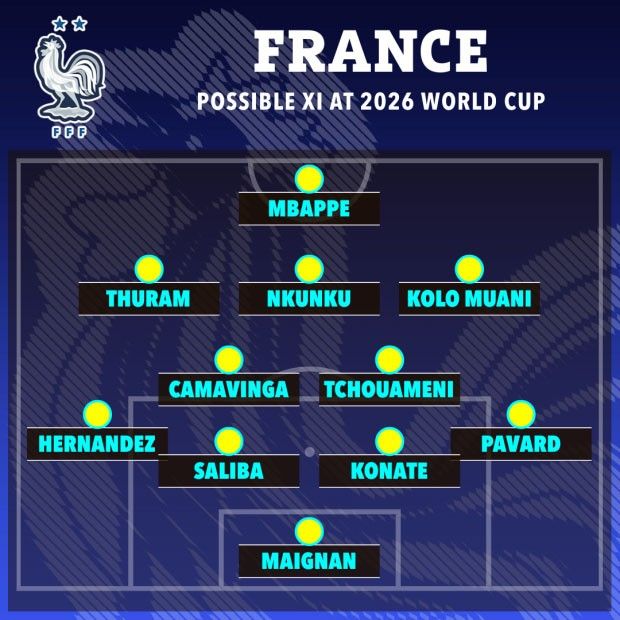
The countdown is on for the World Cup 2026, set to electrify fans as 48 nations clash across the United States, Canada, and Mexico from June 11 to July 19. The French team’s schedule for the group stage is now finalized, and while Les Bleus remain firm contenders, a concerning detail has emerged that could affect their trajectory in this global football tournament. Beginning their campaign against Senegal at New York’s MetLife Stadium, France must quickly pivot to a second match at Philadelphia’s Lincoln Financial Field, a venue surrounded by an unexpected challenge. Finally, the group phase will conclude against Norway in Boston. As supporters rally behind Didier Deschamps’ squad, intense scrutiny surrounds the safety of the locations hosting their fixtures — an issue that demands attention alongside tactical and athletic preparation. The future of France’s quest for World Cup glory might hinge not only on skill and strategy but also on navigating these external factors.⚽️🇫🇷
In brief:
🔥 France’s World Cup 2026 group stage starts against Senegal in New York and ends vs. Norway in Boston.
🔍 The critical concern is their second match in Philadelphia, located in the area with the highest crime rate among tournament sites.
📊 This raises questions about player safety and focus amid the pressure of a demanding tournament.
🔮 The path to qualification demands navigating these concerns while maintaining top performance.
🎫 Fans and bettors alike must consider these factors when following team preparation and making smart, informed decisions.
French Team’s World Cup 2026 Schedule Highlights and Emerging Concerns
The official group stage schedule places France in a challenging trio along with Senegal, Norway, and the eventual winner between Bolivia and Suriname, whose playoff will determine the final group member. Les Bleus start their competition on June 16 at MetLife Stadium in New York, an iconic venue that ranks eighth safest out of eleven sites based on crime rates—a reassuring fact when assessing the team’s environment for their opener. The MetLife Stadium is already well-known in the football community for hosting major events and contributing significantly to FIFA’s global outreach efforts. This game will set the tone for France’s World Cup journey and is an unmissable fixture for fans eager to witness the French legacy continue in this historic tournament phase.
However, the schedule takes a worrying turn with the second match set for June 22 at Lincoln Financial Field, Philadelphia. An alarming study conducted by SeatPick, acclaimed for sports analysis, has identified the area surrounding the stadium as the most dangerous per its crime rate according to FBI data in 2024, focused on various thefts and local delinquency. While the Lincoln Financial Field boasts cutting-edge solar energy solutions and capacity for 67,000 spectators, this stark contrast between the venue’s prestige and its surrounding neighborhood’s crime statistics raises legitimate concerns about the players’ well-being and logistical security. For those following the Philadelphia 2026 World Cup closely, this detail is more than a footnote—it’s a red flag.
Analyzing the Impact of Venue Safety on Team Preparation and Performance
When international teams prepare for the intensity of a FIFA World Cup, off-field factors such as safety, travel logistics, and local environment are crucial. The French squad’s match at Philadelphia pits the team against an area with the highest crime rate among tournament stadium vicinities, which could impact both mental preparation and physical security. The Lincoln Financial Field’s reputation within the global sports community contrasts with the tangible risks highlighted by crime figures, presenting a complex dilemma for Didier Deschamps and his staff. Compared to the Safeguarded MetLife Stadium and the yet unranked Gillette Stadium in Boston, which will host France’s final group game on June 26, the second fixture’s surroundings demand strategic adjustments beyond the pitch.
This raises critical questions about how the team will manage its off-pitch regimen and whether concentrated efforts will be needed to mitigate stress introduced by these external factors. Bettors tracking World Cup match fixtures should weigh these concerns for their potential influence on player performance and the game’s outcome, a key factor for informed wagering.
France’s Group Stage World Cup 2026 Fixtures and Locations
| 🔥 Date | ⚽️ Opponent | 🏟️ Stadium & City | 📉 Safety Ranking among venues |
|---|---|---|---|
| June 16 | Senegal | MetLife Stadium, New York | 8th safest |
| June 22 | Intercontinental Playoff Winner | Lincoln Financial Field, Philadelphia | Most dangerous ⚠️ |
| June 26 | Norway | Gillette Stadium, Boston | Data unavailable |
Strategic Insights and Forecast for France’s Path in the Tournament
As the French team moves closer to the knockout stage, finishing in the top two of their group is imperative, yet even a third-place finish carries the possibility of progression among the best eight of twelve third-placed teams. Didier Deschamps’ squad has shown resilience in qualifying rounds documented extensively on platforms covering the World Cup 2026 qualifiers. Yet navigating a group that includes disciplined Senegal and tenacious Norway will test their squad depth and mentality especially when coupled with concerns about venue safety.
The wider context of the tournament, spanning across multiple host cities such as New York, Philadelphia, and Boston, demands a flexible approach to logistics and mental preparation. Fans would be wise to stay updated on the latest security advisories via outlets reporting on FIFA World Cup fans experiences and consider these factors when engaging with the tournament through tickets or betting strategies.
Moving forward, the scheduling and off-pitch circumstances remind us that the journey of the French football team towards potential glory will rely on navigating both the game on the grass and the challenges emerging in the surroundings. This adds layers of complexity to an already demanding competitive environment in the World Cup 2026.